
If you
haven’t read about it yet, Queen’s University in Kingston, Ontario has recently
suspended a history professor in response to allegations that he used racist
language in the classroom. In the university’s defense, the professor
does not deny that he used phrases such as “japs”, “towelheads. However, in the professor’s defense, the
racial slurs were quotes from books and articles about racism in the
post-colonial era. Oh, and the course in
question was one on post-colonial history.
Perhaps one question that stands is whether a course on post-colonial
history could be taught without discussion and inclusion of racial slurs. The answer clearly is ‘yes’. A better question however is whether such a
course ought to omit such discussion.
The answer as far as I am concerned is an emphatic and resounding ‘absolutely
not’.
To be
clear, were someone to walk into a classroom (or anywhere else for that matter)
and start flinging racial slurs around I would certainly not approve. This being said, a university course where
the material is based in history (be it history, literature, sociology or
otherwise) is not only an acceptable venue for the use of slurs, it is quite
frankly the most appropriate place for them.
Universities are supposedly places of higher learning; a bastion of knowledge
and the one place in a liberal democratic society where we ought not be afraid
of presenting and experiencing our history in its full and often unpleasant
totality.
Of
course racism has no place in Canada today but the freedom and tolerance we
enjoy has not always been present and it has come at a price. We should never forget that there are still
people living in Canada who were around when Stanley Park in Vancouver was a
Japanese internment camp. We should
always remember that although Canada was a place of freedom for slaves fleeing
the United States those slaves were often subject to segregation and racism
North of the border. We should keep in
mind that New France and the Dominion of Canada were built on the blood of
countless natives. Too often are we
complacent with brushing these unfortunate and shameful parts of our heritage
off because “that’s British history, not Canadian history”. Although this may have some degree of truth,
British history IS our history and this is reflected in our laws, our
government and even on the back of the coins we use every day to buy our
coffee.
All this
being said, Canada is one of the most tolerant, open and free societies in the
world – this is why so many immigrants have made the journey to our country for
so many decades. What we must never
forget is that this tolerance has not always been present. Censoring our history, punishing people for
speaking in context about the slurs, violence and discrimination that has been
present in Canada, and attempting to present a revised “clean” version of
history does not promote tolerance. In
fact, denying the worst parts of our track record as a nation detracts from the
multi-cultural mosaic we enjoy on a daily basis. To truly appreciate and enjoy the society we
have built, we must be able to discuss where we came from and understand the
struggles that we faced getting here. This
means that academic settings should embrace demonstrating the realities of
racism and that no professor or student should be afraid of using contextual
material to explore and discuss our history of racism. Even if we reject the material in the modern
era, universities are the perfect place to retain and pass on the knowledge that
Canada was not always perfect – slurs and all; not to hide from this knowledge
and instill fear of recognising our shortcomings as a country.
 |
| Canada, 1918: The Government of Canada issues a set fee that all Chinese immigrants must pay to be allowed entry into Canada. |
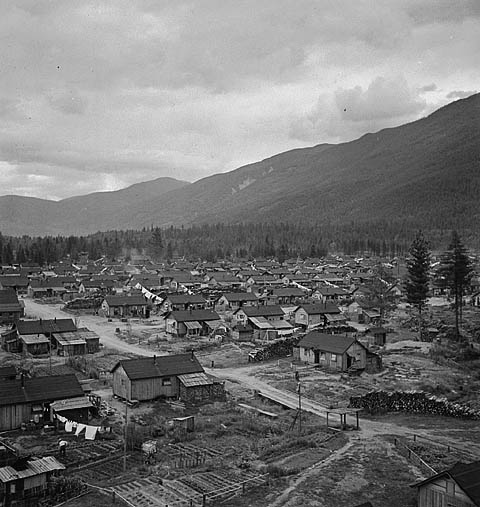 |
| Canada, 1945: The Government of Canada authorised and oversaw the forceful removal of Japanese-Canadians from their homes and relocation into internment camps as pictured. |
 |
| Canada, WW2: Natives serve in the armed forces, lay down thier lives for Canada. Denied the right to vote in federal elections until the 1960's. |
 |
| Canada, 1983: The last segregated school in Canada closes. Seriously... 1983. Let's not forget about this. |
Comments
Post a Comment